Why a 200-year-old mosque in Varanasi was demolished in the middle of the night
Authorities carried out a heavily guarded overnight operation in Varanasi as land was cleared for an ambitious transport hub project linked to Kashi railway station.
India’s OTT platforms can’t stop making shows about 1990s Uttar Pradesh. Here’s the data behind why, and what it says about 601 million streaming viewers finding themselves on screen for the first time.




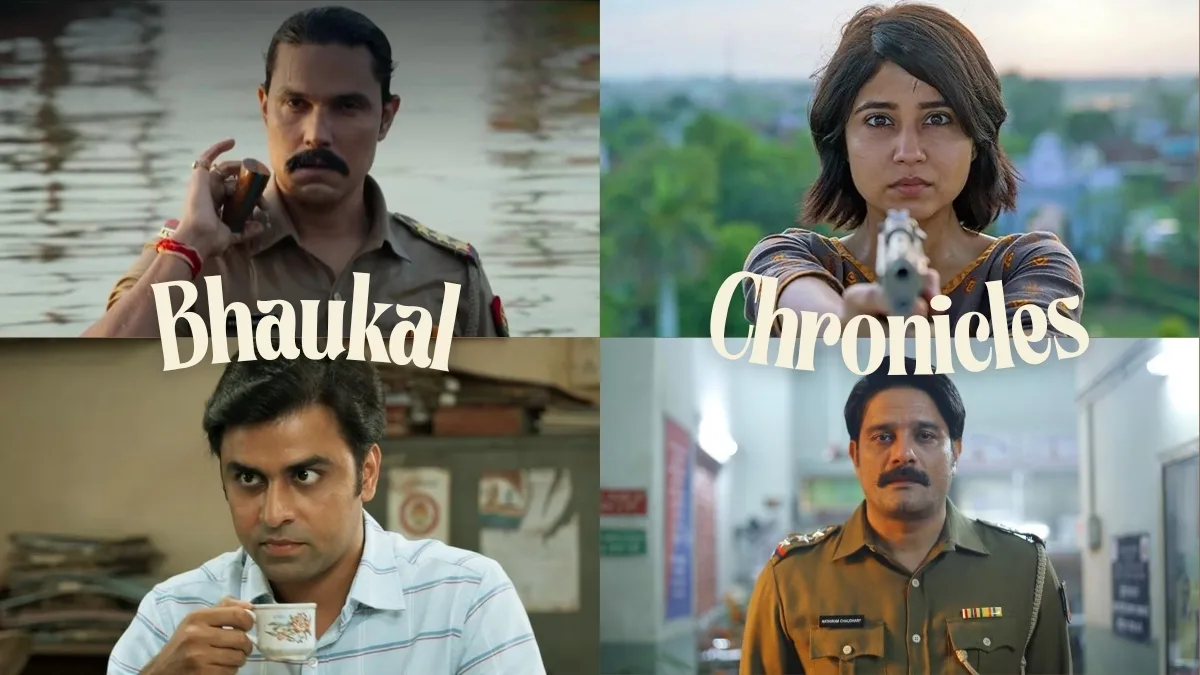
Bhaukal era!
In 2018, Amazon Prime Video released ‘Mirzapur’, a crime drama set in Mirzapur, a town in eastern Uttar Pradesh. The show had gangsters, guns, and a dialect most urban viewers had never heard on screen before. Within weeks of its release, it was the most-talked-about Hindi show on the internet. By the time Season 2 dropped in 2020, it pulled 119.84 million unique viewers in its opening week, according to Chrome Data Analytics. Season 3 became the most-watched Indian streaming original of 2024, with 30.8 million views, per Ormax Media data.
That number is not a coincidence. It is a pattern.
Advertisement
‘Mirzapur’ opened the floodgates. What followed was a string of shows that mined the same geography.
Advertisement
‘Panchayat’ arrived in 2020 on Amazon Prime Video. It is set in a fictional village in UP called Phulera. Unlike ‘Mirzapur’, it is a quiet comedy about a city-educated engineer who takes a government job in rural UP. Season 3 drew 28.2 million views in 2024, the second-highest for any Indian streaming original that year. Season 4, released in June 2025, set a franchise record, trending in the Top 10 in over 42 countries on its opening day and streamed across 95% of India’s pin codes in its first week, according to Amazon Prime Video data. And, season 5 has already been confirmed for 2026.
‘Paatal Lok’, also on Amazon Prime Video, came in 2020. Set partly in UP and Delhi, it follows a low-ranking cop investigating a murder. It won the International Emmy Award for Best Drama Series in 2021. Season 2, released in January 2025, clocked 16 million views in four weeks.
‘Raktanchal’ on MX Player goes further back to the 1980s and 1990s mafia wars of Purvanchal in eastern UP, drawing from real gang conflicts between figures like Brijesh Singh and Mukhtar Ansari. ‘Jamtara’ on Netflix covers UP-Bihar border territory. ‘Inspector Avinash’, the latest entry, premiered Season 2 on JioHotstar on May 15, 2026, set in 1990s UP, based on a real encounter specialist credited with around 150 criminal encounters in the state.
The list keeps growing. ‘Aashram’, ‘Dahaad’, ‘Rana Naidu’, ‘Kohrra’. Different settings, but the same appetite for stories from India’s hinterland.
India’s OTT audience hit 601.2 million in 2025, representing 41% of the country’s population, according to The Ormax OTT Audience Report 2025. That is up from 547 million in 2024 and 481 million in 2023.
The audience is not just urban anymore. Over 55% of Connected TV viewers in India now come from towns with populations under one million, according to market research firm Apprupt. Regional content accounts for more than half of all OTT viewership in India, according to Fortune India. Previously, major cities accounted for 70% of the OTT audience. By 2024, 60% of OTT traffic was coming from outside top cities.
This audience shift is critical. The people now watching these shows are not just Mumbai and Delhi professionals watching a gritty drama about “people from that part of India.” Many of them are from UP, Bihar, and the Hindi heartland themselves. They are watching stories about their own towns, their own dialect, their own political history, on their own phones and televisions.
‘Panchayat’ being streamed across 95% of India’s pin codes is not a marketing number. It tells you that a show set in a UP village is reaching audiences from Kashmir to Kanyakumari.
The decade matters. These shows do not just use UP as a backdrop. They use a very specific UP. The 1990s.
That era had a particular character. The Mandal Commission agitations of 1990 reshaped caste politics across north India. The Babri Masjid demolition happened in 1992. The mid-1990s saw the rise of Bahubali culture, strongmen who straddled crime and politics, across UP and Bihar. The state had some of the highest crime rates in the country during this period. Between 1993 and 2002, UP consistently ranked among the top three states for reported cognizable crimes in India, according to National Crime Records Bureau historical data.
‘Inspector Avinash’ Season 2 is specifically set in this context, showing how criminals in the late 1990s were moving from local gangs into state-level political networks. ‘Raktanchal’ reconstructs the tender mafia and gangland politics of Purvanchal through the same decade.
This period also predates smartphones, CCTV, digital records, and most forms of institutional accountability. For a crime drama, that absence of oversight is narratively useful. Encounters happen. Evidence disappears. Witnesses go quiet. No one has mobile footage.
But there is a deeper reason the 1990s work as a setting. They are recent enough to be familiar, but distant enough to be dramatic. A show set in 2024 UP must reckon with smartphones, social media, and judicial oversight. A show set in 1997 UP does not. The decade gives writers freedom that the present does not allow.
Actor Amit Sial, who is from Kanpur and appeared in ‘Jamtara’, put it plainly: “Crime and sex attract everyone. I don’t know why, but we are stuck in it. OTT was to be a platform where something different could be tried. However, that is mostly lost.”
Actor Aahana Kumra, speaking about her experience working in this genre, said she had been told she looks “too modern, too urban, too smart” to be cast in a UP-set series.
Pankaj Tripathi who headlined ‘Mirzapur’ and is himself from Gopalganj, Bihar, pushed back on the entire premise. He told The Week: “UP and Bihar have always had this problem of perception. They are just like any other state. Bihar’s gross state domestic product might be low, but its emotional and intelligence quotient is high. Half of those who clear the UPSC exams come from here.”
The criticism lands. A 40-year-old actor from Lucknow pointed out to The Week that ‘Raktanchal’ used the Sitapur name essentially as a shorthand for gore, not because the story demanded that specific geography. Female characters in most of these shows remain limited: informers, wives, or collateral damage.
‘Panchayat’ is the notable exception. It uses the same UP village setting but avoids the crime template entirely. It is a workplace comedy about bureaucracy, aspiration, and small-town life. That it has outperformed virtually every crime drama in viewership consistency, with all four seasons in the top three most-watched Indian originals of their respective years, is evidence that the genre is not the draw. The geography is.
OTT platforms understand the numbers.
JioHotstar has been aggressively building its Hindi-language crime drama library to compete with Netflix’s ‘Sacred Games’ legacy and Amazon’s ‘Mirzapur’ dominance. ‘Inspector Avinash’ Season 2 was released in eight episodes, all at once, in seven languages including Hindi, Tamil, and Telugu. It premieres as a middle act of a confirmed trilogy. The final season is reportedly planned for late 2027.
Netflix India told Outlook: “A unique story with novel treatment has the ability to find its audience without limitations on format, language or duration. Stories set in the heartlands have resonated with our audience because they offer differentiated and unique perspectives into characters’ lives which are similar to ours and yet so different.”
The platforms are not being altruistic. They are following data. India’s OTT revenue is projected to grow from $4.31 billion in 2024 to $9.17 billion by 2030, according to Media Partners Asia. Content that performs across 95% of India’s pin codes is a platform’s most valuable asset.
The formula is getting tired. The clichés are piling up. But the appetite for stories from this geography, told honestly, is not going anywhere.
‘Panchayat’ proved that. It took the same UP village and turned it into something the entire world watched. No guns. No encounters. Just a panchayat office, a terrible toilet, and the slow, grinding reality of rural Indian governance.
The UP moment on OTT is not a fad. It is a correction, decades overdue.
Advertisement